

Call To Anytime
+86 15951008670

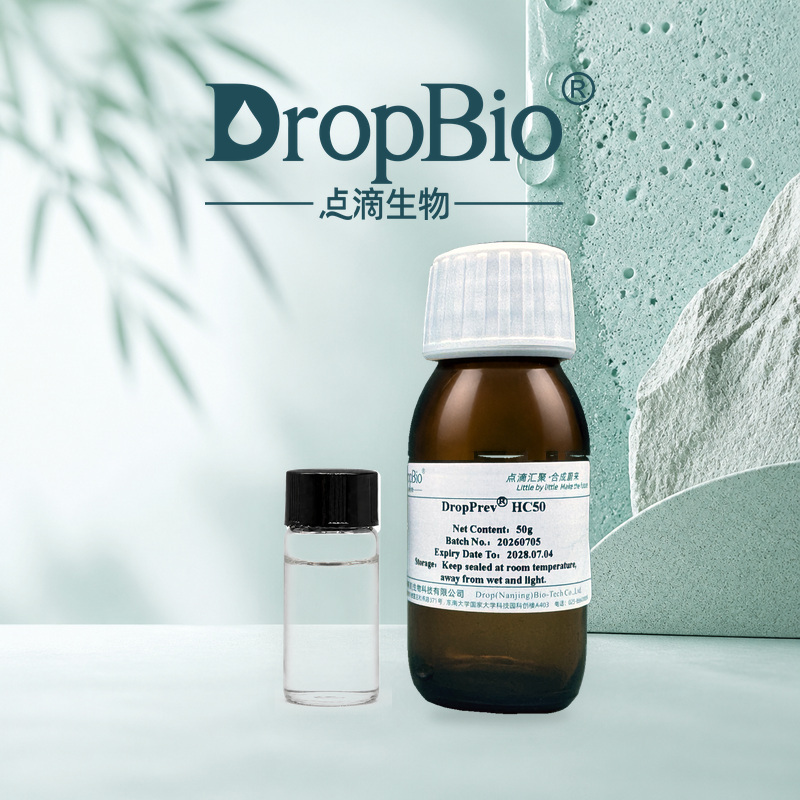
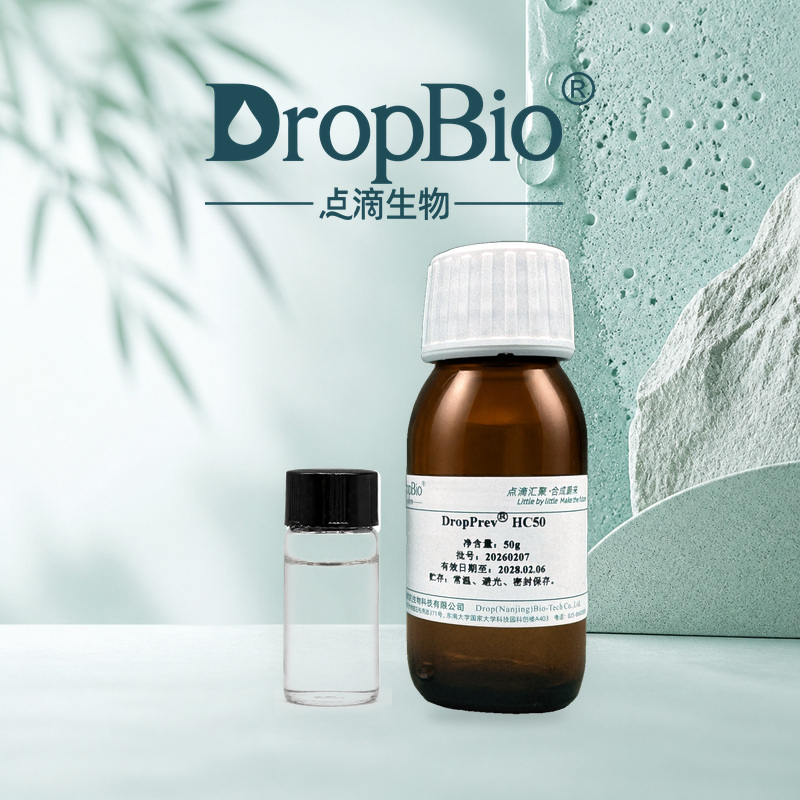
DropPrev® HC50 is a liquid preservative-booster blend composed of 1,2-Hexanediol, Hydroxyacetophenone, and Caprylyl Glycol. The three components complement each other across the antimicrobial spectrum: 1,2-Hexanediol is primarily active against bacteria, Hydroxyacetophenone shows pronounced antifungal activity (notably against Aspergillus niger), and Caprylyl Glycol enhances overall performance through membrane perturbation and improved surface spreading. Positioned as a preservative booster / multifunctional auxiliary, it suits lotions, creams, gels, cleansers, and wet wipes formulated around “preservative-free” or reduced-preservative-load concepts.
Trade Name :
DropPrev® HC50INCI Name :
1,2-Hexanediol, Hydroxyacetophenone, Caprylyl GlycolCAS No. :
6920-22-5, 99-93-4, 1117-86-8Appearance :
Colorless Clear liquidAssay(HPLC) :
/Package :
customizationDropPrev® HC50 is a liquid preservative-booster blend composed of 1,2-Hexanediol, Hydroxyacetophenone, and Caprylyl Glycol. The three components complement each other across the antimicrobial spectrum: 1,2-Hexanediol is primarily active against bacteria, Hydroxyacetophenone shows pronounced antifungal activity (notably against Aspergillus niger), and Caprylyl Glycol enhances overall performance through membrane perturbation and improved surface spreading. Positioned as a preservative booster / multifunctional auxiliary, it suits lotions, creams, gels, cleansers, and wet wipes formulated around “preservative-free” or reduced-preservative-load concepts. None of the three components is listed as a permitted preservative under China’s Cosmetic Safety Technical Specification; the product is not used under a “permitted preservative” designation.
Lotions / Creams · Gels · Cleansers · Wet Wipes · Serums / Toners · “Preservative-Free” Concept Formulas
The formulation logic of HC50 is not “one ingredient, broad spectrum,” but division of labor by microbial type, linked by caprylyl glycol as the booster. 1,2-Hexanediol is effective against bacteria but has limited activity against moulds and yeasts, and is therefore never used as a standalone preservation system in water-based formulas. Hydroxyacetophenone derives its antimicrobial activity primarily from the phenolic hydroxyl group, with pronounced antifungal action (especially against Aspergillus niger) and some inhibition of Pseudomonas aeruginosa. Caprylyl glycol leans toward Gram-positive activity with some antifungal contribution, but its core value lies in reducing surface tension and helping other antimicrobial components spread and penetrate more uniformly. Together, the three provide complementary coverage across bacterial and fungal challenges rather than simple concentration stacking.
Caprylyl glycol possesses intrinsic antimicrobial activity, but this activity is weak and limited in scope; used alone, it cannot constitute a broad-spectrum preservation system, and products relying solely on caprylyl glycol carry genuine contamination risk over shelf life. In HC50, caprylyl glycol should be understood as a booster and spreading enhancer: it improves the distribution uniformity of antimicrobial components by lowering surface tension and perturbs microbial membranes, making it easier for 1,2-hexanediol and hydroxyacetophenone to reach their targets. This role definition governs the use-level logic of HC50—it delivers “boosting” value, not “primary preservative” substitution.
The division of labor is 1,2-hexanediol for bacteria + hydroxyacetophenone for fungi + caprylyl glycol for boosting and spreading. 1,2-Hexanediol is effective against bacteria but limited against moulds and yeasts, and cannot serve as a standalone preservation system in water-based formulas; hydroxyacetophenone delivers pronounced antifungal action (especially against Aspergillus niger), precisely covering the gap left by 1,2-hexanediol; caprylyl glycol lowers surface tension and promotes uniform distribution and penetration of the antimicrobial components, allowing the first two to perform more fully. The logic is not that “all three are broad-spectrum,” but that bacterial and fungal coverage are each addressed, with caprylyl glycol linking the two ends. Importantly, the endpoint is preservative boosting, not replacement of a permitted preservative’s “primary preservation” function.
None of the three components appears on China’s permitted preservative list. Hydroxyacetophenone is explicitly cited in regulatory Q&A as an example of a “preservative-boosting substance outside the permitted preservative list”; 1,2-hexanediol and caprylyl glycol are likewise used under multifunctional identities as humectants, solvents, or preservative boosters. Hydroxyacetophenone is included in the IECIC (2021); CIR assessed it as safe in leave-on and rinse-off cosmetics at concentrations up to 5%, with China’s maximum historical leave-on use level at approximately 1.006%. Accordingly, HC50 should be positioned as a “preservative booster / multifunctional auxiliary system,” not as a “permitted preservative.” If a formula contains no permitted preservative at all, whether it passes microbiological challenge testing must be confirmed by preservative efficacy testing (PET/challenge testing) on the final formulation—claims of “preserved” or “preservative-free” cannot rest on HC50 addition level alone.



Please Read On, Stay Posted, Subscribe, And We Welcome You To Tell Us What You Think.
Get Directions


Copyright @ 2026 Drop(Nanjing)Bio-Tech Co.,Ltd.. All Rights Reserved.dyyseo.com  Network Supported 苏ICP备2022027422号