

Call To Anytime
+86 15951008670

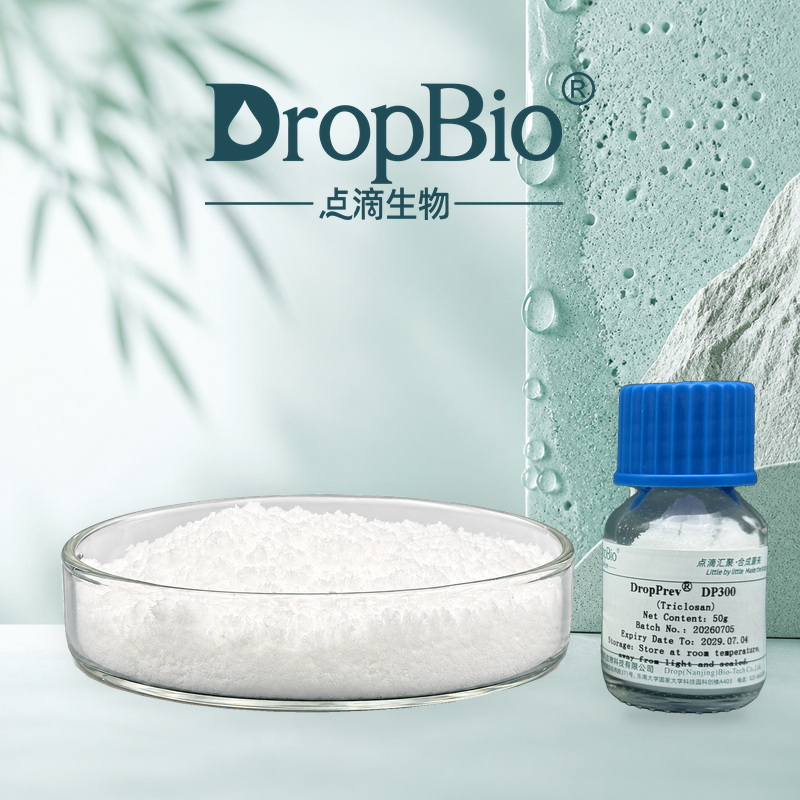
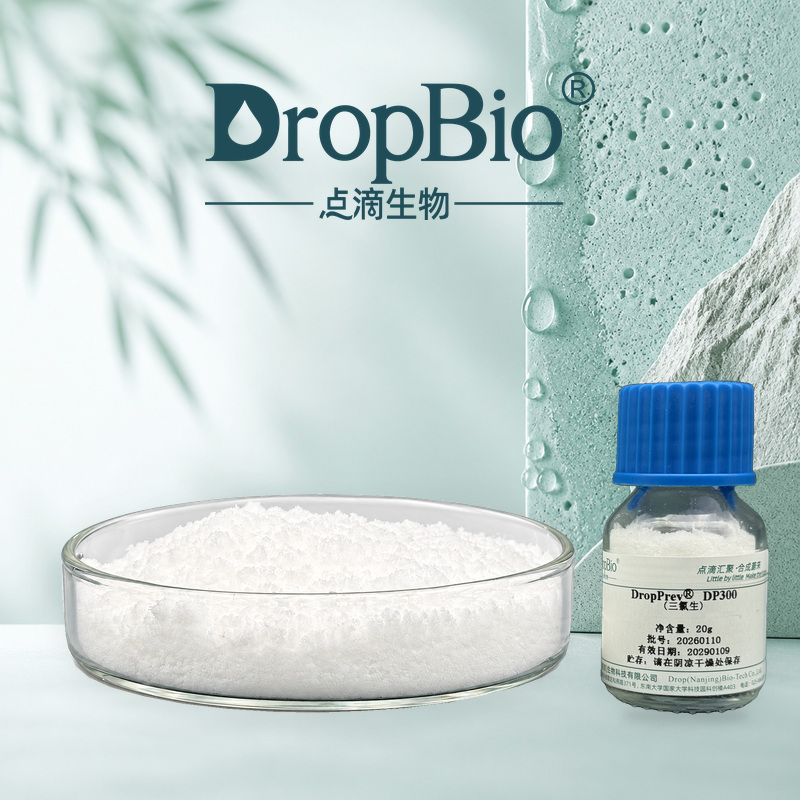
DropPrev® DP300 is a cosmetic-grade preservative ingredient based on Triclosan, supplied as white crystal powder. Triclosan is a broad-spectrum antimicrobial agent with activity against Gram-positive bacteria, Gram-negative bacteria, and some fungi. Its primary mechanism is inhibition of FabI (enoyl-ACP reductase) , a key enzyme in bacterial fatty acid synthesis, alongside disruptive effects on bacterial cell membranes.
Trade Name :
DropPrev® DP300INCI Name :
TriclosanCAS No. :
3380-34-5Appearance :
White crystal powderAssay(HPLC) :
97.0 ~ 103.0Package :
customizableDropPrev® DP300 is a cosmetic-grade preservative ingredient based on Triclosan, supplied as white crystal powder. Triclosan is a broad-spectrum antimicrobial agent with activity against Gram-positive bacteria, Gram-negative bacteria, and some fungi. Its primary mechanism is inhibition of FabI (enoyl-ACP reductase) , a key enzyme in bacterial fatty acid synthesis, alongside disruptive effects on bacterial cell membranes. Within the specific product categories permitted by regulation, DropPrev® DP300 functions as a preservative to help control formula bioburden. Its use scope and concentration are strictly governed by regulatory limits, and it does not carry an anti-acne active efficacy claim.
Hand Soaps · Bath Soaps · Shower Gels · Deodorants (non-spray) · Cosmetic Powders · Concealers · Nail Cleansers (use frequency not more than once every 2 weeks)
The core antimicrobial mechanism of triclosan is selective inhibition of bacterial enoyl-ACP reductase (FabI) , blocking the key elongation step in the bacterial fatty acid synthesis pathway. Fatty acids are essential components of bacterial membrane phospholipids; when FabI is inhibited, bacteria cannot complete normal membrane lipid synthesis, membrane structural integrity is compromised, and growth and proliferation are suppressed. This mechanism shows clear activity against Cutibacterium acnes (formerly Propionibacterium acnes), with strains expressing higher FabI levels exhibiting correspondingly greater susceptibility to triclosan. Because human fatty acid synthesis machinery differs structurally from bacterial FabI, triclosan's selectivity for the bacterial enzyme underlies its relative specificity of antimicrobial action.
Triclosan's water solubility is only about 10 mg/L with a logP of approximately 4.7–4.8, classifying it as highly lipophilic. This means its free dissolved concentration in a purely aqueous phase is extremely low, and achieving complete dissolution of a 0.3% addition level by simple mixing is not feasible. Practical formulations require solubilization or carrier strategies: common approaches include pre-dissolving triclosan in co-solvents such as propylene glycol or ethanol before addition to the aqueous phase, or employing micellar solubilization with suitable surfactants. Additionally, with a melting point of approximately 56–57℃, triclosan should be fully dissolved or uniformly dispersed before incorporation to avoid localized concentration inhomogeneity or finished-product appearance defects from undissolved crystalline particles. It is recommended that preservative challenge testing be conducted during formulation development to verify the actual antimicrobial efficacy delivered by the chosen solubilization/carrier system, rather than relying on theoretical addition levels as the basis for preservative effectiveness.
Not recommended, and carries regulatory risk. Under Chinese regulation, triclosan's status is a permitted preservative, with its permitted concentration and product categories defined around preservative function, not anti-acne efficacy. Although in vitro studies demonstrate antimicrobial activity against C. acnes and triclosan has historically appeared in anti-acne products, claiming triclosan as an anti-acne active in cosmetics lacks a corresponding regulatory basis under the current framework. Of particular note, leave-on anti-acne skin care products (such as acne creams and serums) generally do not fall within the permitted product categories for triclosan, and using it in such products may itself constitute out-of-scope use. The positioning of DropPrev® DP300 should be strictly confined to a preservative within regulatory-permitted categories, and it should not be presented as an "anti-acne active" or directly associated with anti-acne efficacy claims in product descriptions, claims, or marketing materials.



Please Read On, Stay Posted, Subscribe, And We Welcome You To Tell Us What You Think.
Get Directions


Copyright @ 2026 Drop(Nanjing)Bio-Tech Co.,Ltd.. All Rights Reserved.dyyseo.com  Network Supported 苏ICP备2022027422号