

Call To Anytime
+86 15951008670

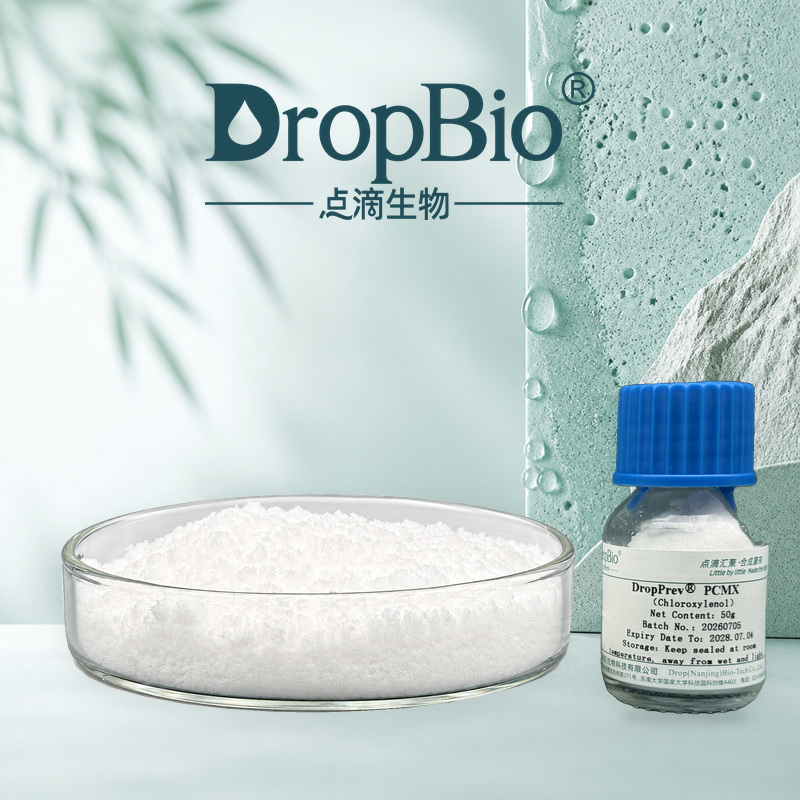
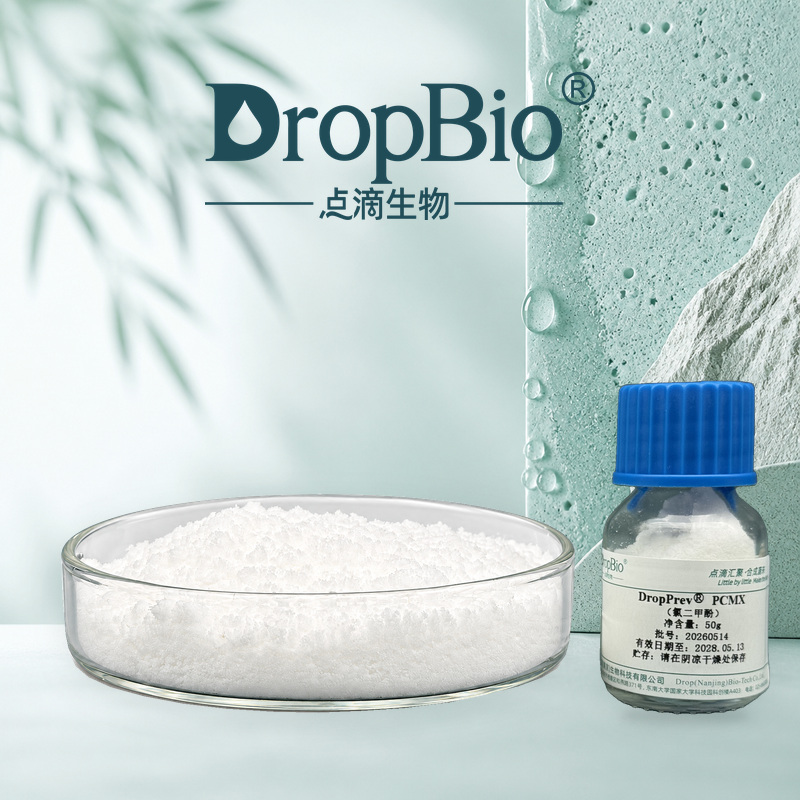
DropPrev® PCMX is a cosmetic-grade preservative based on Chloroxylenol (PCMX), supplied as white or off-white needle-like crystals or crystalline powders. PCMX is a globally recognized broad-spectrum antimicrobial agent, exhibiting excellent bactericidal and inhibitory effects against Gram-positive bacteria, some Gram-negative bacteria, and certain fungi.
Trade Name :
DropPrev® PCMXINCI Name :
ChloroxylenolCAS No. :
88-04-0Appearance :
White or off-white needle-like crystals or crystalline powdersAssay(HPLC) :
≥99.0Package :
CustomizableDropPrev® PCMX As a permitted preservative, it is known for its stability, low toxicity, and relatively mild irritation profile, widely used in hand washes, wet wipes, soaps, creams, and lotions.
PCMX's antimicrobial mechanism primarily targets the cytoplasmic membrane. It adsorbs onto the negatively charged bacterial membrane, penetrates and disrupts the membrane structure, leading to increased permeability and massive leakage of essential intracellular components like potassium ions and nucleotides. Additionally, PCMX inhibits key membrane-bound enzymes, blocking energy metabolism and biosynthesis, ultimately causing cell death. This multi-target physicochemical disruption makes resistance development unlikely.
CMX demonstrates strong anti-Gram-positive bacterial activity (e.g., Staphylococcus aureus), alongside good inhibition of Gram-negative bacteria (e.g., E. coli, Pseudomonas aeruginosa) and certain fungi (e.g., Candida albicans). It should be noted that its efficacy against moulds and yeasts is weaker than against bacteria; in highly mould-prone formulas, it is recommended to pair it with other antifungal preservatives (like Caprylhydroxamic Acid or Phenoxyethanol) to build a complete preservation barrier.
PCMX is only slightly soluble in water (~0.03%), so it cannot be directly dispersed into a purely aqueous phase, which would lead to crystallization or floating particles. The correct approach is pre-dissolution: solvents or solubilizers must be incorporated during formulation design. The most common method is to pre-dissolve PCMX in propylene glycol, PEG-400, ethanol, or surfactants with adequate stirring until a clear solution is obtained, and then add it to the aqueous system. In formulas with high surfactant concentrations (like hand washes or wet wipe fluids), micelles formed by surfactants help solubilize PCMX. Ensure sufficient temperature and stirring time during the pre-dissolution step in cold processes.
PCMX is widely used globally with mature safety data. Under China's Cosmetic Safety Technical Specification and the EU Cosmetics Regulation (EC No. 1223/2009), PCMX is listed as a permitted preservative with a maximum permitted concentration of 0.5%. At typical effective levels of 0.1%–0.5%, it has low skin irritation potential, is non-mutagenic, and is not a carcinogen. However, contact allergy may occur in a very small subset of individuals, so formulations must undergo safety assessments prior to market launch. As a hard constraint, the actual added concentration of PCMX in any formula must not exceed 0.5%.
PCMX's antimicrobial spectrum is strong against bacteria (especially Gram-positive), but relatively weaker against moulds and yeasts. If your product (e.g., botanical extract formulas, high-water-content creams) faces a high risk of mould contamination, it is recommended to pair PCMX with other preservatives known for potent antifungal properties. For example, PCMX can be combined with Caprylhydroxamic Acid (like the components in the DropPrev® PCP system), Phenoxyethanol, or Salicylic Acid. This "strong antibacterial + strong antifungal" combination builds a broader protective spectrum, ensuring the product passes preservative challenge testing throughout its shelf life.



Please Read On, Stay Posted, Subscribe, And We Welcome You To Tell Us What You Think.
Get Directions


Copyright @ 2026 Drop(Nanjing)Bio-Tech Co.,Ltd.. All Rights Reserved.dyyseo.com  Network Supported 苏ICP备2022027422号